
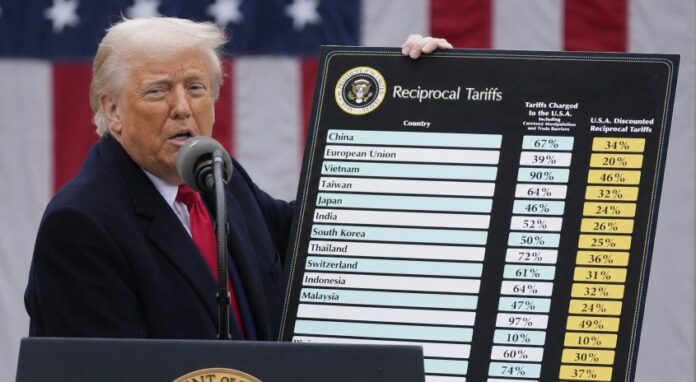
In a significant development in U.S. trade policy, President Donald Trump has introduced a new set of tariffs on imports from over 80 countries, succeeding the expired 10% global tariff. The new tariffs, which range between 10% and 12.5%, target imports from nations such as the United Kingdom, European Union member states, Canada, Mexico, Australia, India, and China. This move, initiated under Section 301 of the US Trade Act of 1974, aims to address concerns regarding forced labor in global supply chains. The U.S. Trade Representative, Jamieson Greer, emphasized the expectation that trading partners will enhance restrictions on imports associated with forced labor.
The announcement comes in the wake of a U.S. Supreme Court ruling earlier this year that questioned the legality of previous tariffs imposed under emergency powers. This prompted the administration to pivot to an alternative legal framework for imposing the new tariffs. However, the decision has not been well-received universally. Key U.S. allies, including Australia and Brazil, have criticized the tariffs as unjustified, expressing intentions to seek their removal. The European Union has requested clarification from Washington, citing surprise over the abrupt decision, while Canada has argued against its inclusion in the tariffs, pointing to its strong measures against forced-labor imports and advocating for a multilateral approach to the issue.
Domestic reactions to Trump’s tariff policy remain divided. While the administration asserts that its trade strategies have bolstered the U.S. economy and safeguarded domestic industries, public opinion surveys suggest that many Americans attribute the tariffs to rising consumer prices. The controversy over the tariffs is further fueled by trade experts questioning the president’s constitutional authority to enforce broad tariff measures without congressional consent, indicating potential future legal challenges.
The introduction of these tariffs adds another layer of complexity and uncertainty to global trade dynamics. As governments around the world evaluate the economic repercussions, they are also considering possible responses to these U.S. measures. The international community is closely monitoring the situation, with some nations voicing their discontent while others seek to understand the full implications of the new tariffs on their economies.