
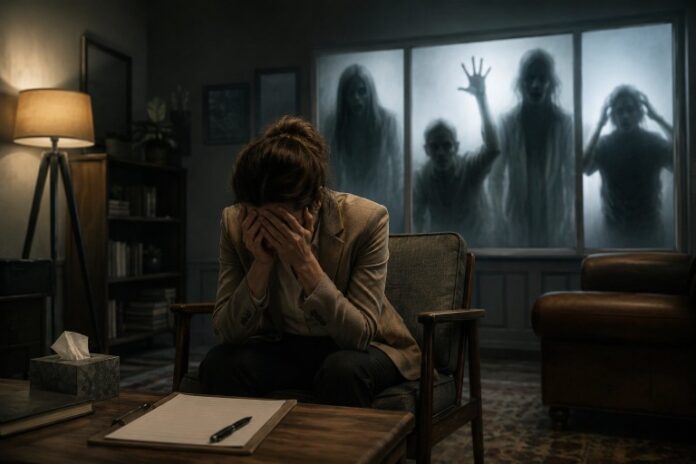
A new trend in horror and psychological films is emerging, where therapists are portrayed not as infallible advisors but as complex individuals grappling with their own vulnerabilities. This shift mirrors broader societal conversations about mental health, acknowledging that therapists, too, navigate personal challenges.
Films like “If I Had Legs I’d Kick You,” “Smile,” “Backrooms,” and “A Private Life” place therapists at the heart of chilling narratives. These characters are not merely supporting figures dispensing guidance; instead, they are central protagonists confronting their own fears, traumas, and psychological breakdowns while endeavoring to assist others. This change in portrayal reflects a wider acceptance and discussion of therapy in mainstream culture, where more people are seeking mental health support, and social media is playing a role in normalizing therapy conversations.
This evolving depiction of therapists in film coincides with a growing public awareness and openness about mental health issues. As therapy becomes a more common topic of discussion, filmmakers are increasingly inclined to portray therapists as ordinary people dealing with the same emotional struggles as anyone else, rather than as idealized professionals.
By employing elements of supernatural or psychological horror, many of these films effectively capture the internal emotional battles faced by therapists. Themes such as anxiety, burnout, and unresolved trauma are explored, challenging traditional portrayals of mental health professionals and highlighting the pressures they endure in their roles.
In presenting therapists as fallible and human, these stories not only contribute to the narrative of mental health awareness but also offer a deeper reflection on the often-overlooked personal challenges faced by those in the mental health profession. This nuanced portrayal encourages audiences to reconsider their perceptions of therapists and their understanding of mental health support.