
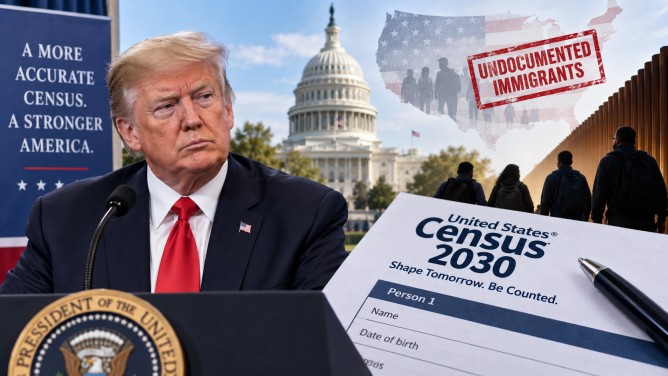
The Trump administration has put forward a controversial proposal to alter the US census by excluding undocumented immigrants from the population count. This potential change could have a profound impact on the allocation of federal resources and the delineation of congressional districts across the nation.
Traditionally, the US census, conducted every decade, has counted every individual residing in the country, irrespective of their citizenship or immigration status. However, under the new proposal, only lawful permanent residents would be included, while undocumented immigrants and some individuals in other non-permanent immigration categories might be left out. The Census Bureau is contemplating the use of government administrative records to ascertain the legal status of individuals included in the census.
The census data is crucial, as it determines how federal funding is distributed and how many seats each state is awarded in the House of Representatives. The administration’s proposal has sparked concerns among Democrats and advocacy groups who are likely to challenge the move legally, arguing that the Constitution mandates a count of all people living in the United States.
Additionally, the administration is also reviewing potential changes to questions about race and ethnicity, citing issues related to the data’s usefulness and sensitivity. Any modifications in this area could have significant implications for demographic data that is essential for government planning and policymaking.